What to Do After a Sports Dental Injury
Published: 29 January 2026
Athletes and sports enthusiasts participating in contact sports such as rugby, hockey, MMA or boxing can sometimes encounter dental trauma. Whilst we always advocate wearing a custom-fitted bespoke mouthguard, injuries do occur, and prompt treatment is key.
In this blog, we’ll explain what to do if you experience specific sports-related dental injuries. From a simple chipped tooth, soft tissue injury, a tooth that is knocked or even in the worst-case scenario a broken jaw, here is some advice so you can protect your smile and get the right care as quickly as possible.
What to do with a broken or chipped tooth
A chipped or fractured tooth can cause discomfort and sensitivity and should be treated promptly.
You should rinse your mouth with warm water to remove debris if required. The chipped tooth may well be sensitive to extremes of temperature. If the broken fragment is small, this discomfort will pass quickly. It is advisable to contact your dentist to make an appointment to have this restored. If the fractured portion is extensive, you may see the nerve of the tooth exposed, with a small red area in the middle of the tooth. This can be very painful, and an urgent appointment will be needed with your dentist to relieve pain and possibly to prevent infection of the nerve.
A cold compress can help minimise swelling and discomfort if there is any associated soft tissue swelling. Save any broken tooth fragments and bring them in milk or saliva to an emergency dental appointment. Your dentist may be able to reattach the fragment of the tooth or provide a filling or a crown. Root canal treatment may be required if the nerve has been exposed or the trauma has been significant.
What to do with a loose tooth
If the tooth has moved enough to prevent your mouth from closing, gently and slowly reposition the tooth using light pressure; this may cause discomfort. Apply an ice pack externally to ease pain and reduce any swelling. Do not try to pull the tooth out. Seek emergency dental care as soon as you can.
What to do with a knocked-out tooth
A knocked-out tooth requires urgent dental care to increase the chances of successful reimplantation. You can usually save a knocked-out tooth by either putting it back in place, into milk or saliva, as soon as possible, before immediately contacting your dentist. Do not transport the tooth in dry conditions; always place it in either milk, saline, your own saliva, or inside your cheek of your mouth. You may want to very gently rinse the tooth with the above, if it has fallen into mud. It is very important that you do not thoroughly clean the root surface, as you may remove or damage the important surface cells needed for reattachment.
Seek emergency dental care within 30-60 minutes for the best chance of saving the tooth.
We also suggest seeking emergency dental care even if you cannot find the knocked-out tooth, as there may be fragments or damage to the gums, jaw, or surrounding teeth that require immediate attention. Prompt treatment helps control bleeding, prevent infection, assess underlying damage, and gives you more options for repairing or replacing the tooth.
What to do with soft tissue injuries (Gums, Lips, Tongue)
Rinse the affected area gently with salt water and apply pressure with a clean gauze to stop the bleeding. If bleeding and pain persist beyond 15 minutes, seek emergency dental care immediately.
What to do with a fractured or broken jaw
A fractured or broken jaw will cause major pain and discomfort.
If you experience severe pain along with any of the following symptoms, you should seek medical care as soon as possible.
- The feeling that your teeth do not fit together properly when the jaw is closed
- Being unable to open your mouth all the way
- A numb chin or lip
- Drooling
- Being unable to fully close your mouth
- Bleeding from the mouth
- Extreme bruising around the jaw
- Difficulty speaking
- Headache, confusion or a concussion
If you think you have broken your jaw, immobilise it using a bandage or cloth, apply a cold compress externally to help with discomfort, avoid excessively moving the jaw and do not consume solid food. Go to your nearest A&E department immediately.
How to Get an Emergency Dental Appointment
If you experience a dental injury during sport, seek emergency dental care as soon as possible. Contact your local Clyde Munro practice immediately to request an emergency appointment. Acting quickly can help reduce pain, prevent further damage and improve the chances of saving your tooth.
If your injury occurs outside normal opening hours, call NHS 111, who can advise you on accessing urgent out-of-hours dental care.
Sports Mouthguards
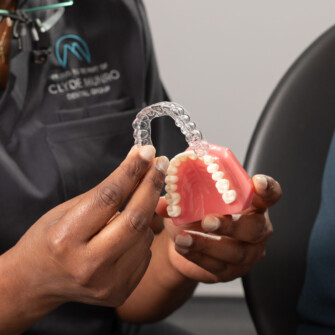
Wearing a mouthguard during sports can significantly reduce the risk of dental trauma and injuries to your teeth and soft tissues of your mouth and lips. Custom sports mouthguards made by a dentist, offer the best protection, comfort and fit compared to shop-bought mouthguards.
Read more about our custom sports mouthguards here.
Share
News & Blog.
21 September 2026
17 August 2026
03 August 2026
