Tooth Brushing Tips for the Whole Family
Published: 19 October 2017
Brushing your teeth twice a day for two minutes is the starting point for a good tooth brushing routine, whether you are helping a toddler or looking after your own teeth.
Family life can make those few minutes surprisingly difficult to protect. These tooth brushing tips explain how to clean thoroughly, choose suitable toothpaste and help children and teenagers build habits that last a lifetime.
How often and how long should you brush your teeth?
Aim for two minutes of brushing, twice daily. Make one session the last thing you do before bed and fit the other into another part of your day.
Use a timer if you tend to rush. Think of your mouth in four sections and spend roughly 30 seconds on each, covering every tooth surface. Take a look at our handy guide below.
Parents need uninterrupted brushing time, too. If brushing alongside your children means repeatedly stopping to help, choose a separate moment for your own routine. Getting everyone else ready for bed should not mean skipping your own oral care.
How to brush your teeth properly
Thorough cleaning matters more than brushing quickly or pressing hard. Follow the same order each time so you are less likely to miss an area.
- Start with the outside surfaces. Work around the teeth on both sides, cleaning gently along the gum line.
- Clean the inside surfaces. Reach behind the front teeth and along the inside of the back teeth.
- Brush the chewing surfaces. Clean the tops of the back teeth as well as their sides.
- Check that you have covered every area. Include the teeth at the very back before spitting out excess toothpaste.
Sticking to the four tips above will help keep you and your family’s teeth clean and healthy!
Should you brush your teeth before or after breakfast?
Brushing before breakfast is a practical option, especially if mornings are rushed. If you prefer to brush after breakfast, avoid doing so immediately after acidic foods or drinks, such as fruit juice.
The Oral Health Foundation advises waiting at least an hour after eating or drinking before brushing. Brushing before breakfast can be easier if you need to leave home soon after eating.
Whichever morning routine you choose, keep your bedtime brush as the priority. Ask your dentist for individual advice if you have tooth wear or sensitivity.
Which toothbrush and toothpaste should you use?
Choose a toothbrush with a small head that comfortably reaches the back of your mouth. Soft or medium bristles suit most adults. A brush that feels awkward to manoeuvre may make thorough cleaning harder.
You can use either an electric or manual toothbrush; both can clean effectively when used correctly. An electric brush may help if you find it difficult to reach every surface, and some have a useful timer.
Follow the instructions for your brush and ask your dentist to demonstrate the technique if you are unsure.
Adults should use toothpaste containing between 1000 and 1500 parts per million of fluoride. Look for “ppm fluoride” on the packaging. Fluoride helps protect teeth against decay.
For children, check both the fluoride strength and the amount you put on the brush. The age guide below explains what to use.
Toothbrushing tips for babies and small children
Begin brushing as soon as your baby’s first tooth appears. Use a small, soft toothbrush designed for their age and make brushing part of the morning and bedtime routine.
How much toothpaste should young children use?
The amount of recommended toothpaste changes depending on the age of your child/children.
- Under three: Use a smear of toothpaste containing at least 1,000ppm fluoride. Your dentist may recommend a family toothpaste with a higher fluoride level.
- Ages three to six: Use a pea-sized amount of toothpaste containing 1,000 to 1,500ppm fluoride.
- Age seven and over: Use toothpaste containing 1,000 to 1,500ppm fluoride.
Encourage children to spit out the toothpaste when they can and avoid rinsing immediately afterwards. Do not let them eat toothpaste or lick it from the tube.
How to get your toddler to brush their teeth?
Parents or carers should brush young children’s teeth and continue helping or supervising until at least age seven. For a child, brushing teeth thoroughly is a skill that takes practice.
If your toddler resists brushing, try a few small changes to make it feel familiar and manageable:
- Let your child choose between suitable toothbrushes so they feel involved
- Use a two-minute timer or a brushing song to make the time easier to follow
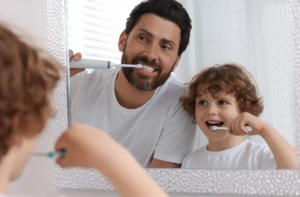
- Use a mirror so they can see where the brush goes, and guide their hand when needed
- Let them have a turn holding the brush, then explain that you will finish cleaning every tooth
- Use a favourite toy to demonstrate brushing before their turn
- Praise their effort or try a sticker chart to celebrate taking part
Keep the routine calm and predictable. If brushing is consistently upsetting or seems painful, ask your dental team for help.
Helping teenagers keep a good brushing routine
Busy mornings, late nights and changing routines can make brushing easy to forget. A phone reminder or keeping a timer beside the sink may help teenagers stay consistent.
Cleaning around fixed braces
Brackets and wires in fixed braces need careful cleaning because food and plaque can collect around them. Your teen’s orthodontic team can demonstrate brushing around the appliance and using suitable interdental brushes. They may advise extra brushing after meals.
Follow the instructions for the specific clear aligner or fixed brace that you have and keep regular dental appointments during treatment. You can learn more about teen orthodontics here.
Should you floss before or after brushing?
You should be cleaning between your teeth daily, ideally before brushing. Dental floss and interdental brushes reach areas that a toothbrush may miss.
Use floss gently against the sides of the teeth. An interdental brush should fit the space without being forced. Your dentist or hygienist can help you choose the right method and brush size.
For children, ask the dental team when to start cleaning between teeth and how to help safely. Our dental hygiene team can demonstrate a routine suited to each family member.
Should you rinse after brushing your teeth?
You should spit out excess toothpaste but avoid rinsing straight away. Rinsing with water removes some of the fluoride left on your teeth, reducing its protective effect.
Should you use mouthwash before or after brushing your teeth?
Use mouthwash at a separate time from brushing, rather than as a step immediately before or afterwards. After lunch can be a convenient choice. Using mouthwash straight after brushing washes away the concentrated fluoride left by toothpaste.
Mouthwash does not replace brushing or cleaning between your teeth. If using a fluoride mouthwash, avoid eating or drinking for 30 minutes afterwards.
Conclusion
A few manageable habits can make daily dental care easier for everyone. If you need help with brushing technique or how to clean around fixed braces, contact your local Clyde Munro practice. Our team can talk you through a routine that suits your family.
Share
News & Blog.

16 October 2026


21 September 2026
